

Which Mobility Lift Material is Better, Aluminum or Steel?: How to Choose the Right Material for Your Environment
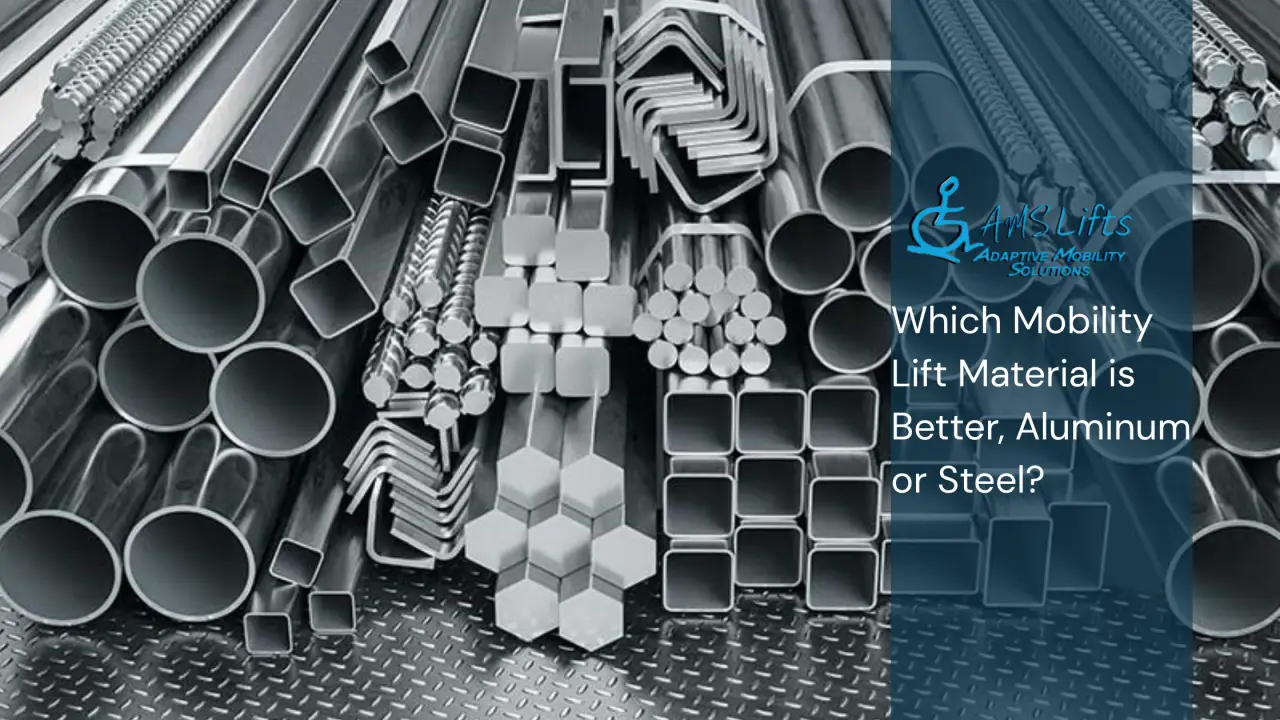
Table of Contents
- Steel vs. Aluminum: What You're Actually Choosing
- Quick Comparsion
- What "Stainless Components" Actually Means
- Real Products, Real Differences
- The Budget Lift Conversion
- What's Right for Your Area?
- Technical Considerations for Your Outdoor Installation
- The Bottom Line
Most vertical platform lift problems don’t start with the lift. They start by putting the wrong material in the wrong place. A lift can be perfectly built, installed correctly, and still fail early if the material doesn’t match the environment. Steel doesn’t care how good the installation was. Neither does rust.
This guide breaks down the material differences between steel and aluminum residential platform lifts, what the specs actually mean, and how environment, not price, should drive your decision.
Steel vs. Aluminum: What You’re Actually Choosing
Carbon Steel
Carbon steel is the default material in most traditional vertical platform lifts. It offers high tensile strength (400–550 MPa) and yield strength around 250 MPa, making it more than capable of handling the structural loads a residential lift demands. It’s also the most affordable option upfront.
The limitation isn’t its strength. It’s corrosion resistance, or the lack of it. Uncoated carbon steel will begin to oxidize within hours of moisture exposure. Every steel lift relies on a protective barrier to prevent this:
• Powder coat (typically 60–100 microns / 2.4–4 mils thick)
• Paint (typically 25–75 microns)
• Hot-dip galvanizing (typically 45–85 microns per ASTM A123)
Those coatings work, until they don’t. A scratch, chip, or worn edge lets moisture in. Once corrosion starts underneath a coating, it spreads and cannot be stopped without stripping and recoating the affected area.
Aluminum (6061-T6 Alloy)
Most aluminum platform lifts use 6061-T6 alloy, which offers tensile strength of approximately 310 MPa and yield strength around 276 MPa, lower than carbon steel, but more than sufficient for the structural demands of a residential vertical platform lift.
The real advantage isn’t strength, it’s the absence of a coating’s dependency. Aluminum naturally forms a thin oxide layer when exposed to oxygen. This layer is self-healing: if scratched, it reforms. It doesn’t flake, it doesn’t spread, and it doesn’t require maintenance to remain effective.
In salt spray testing per ASTM B117 (the standard corrosion resistance benchmark), aluminum significantly outlasts bare carbon steel. That gap matters enormously in coastal eastern North Carolina.
Quick Comparison
|
Property |
Carbon Steel |
Aluminum |
Stainless Steel |
|
Tensile Strength |
400–550 MPa |
260–310 MPa |
515–690 MPa |
|
Yield Strength |
250–350 MPa |
200–270 MPa |
205–310 MPa |
|
Density |
7.85 g/cm³ |
2.70 g/cm³ |
7.99 g/cm³ |
|
Corrosion Resistance |
Poor (uncoated) |
Excellent |
Very Good |
|
Coating Required |
Yes |
No |
No |
|
Salt Spray Rating* |
300–500 hrs |
1,000+ hrs |
500–700 hrs |
|
Relative Cost |
$ |
$$$ |
$$$$ |
|
Typical Use |
Frame/structure |
Frame/structure |
Fasteners/cables |
Note: Salt spray ratings are comparative benchmarks, not guaranteed service life. Real-world performance depends on coating quality, installation, and maintenance.
What “Stainless Components” Actually Means
You’ll see “stainless components” listed as a feature on many platform lifts. It’s a meaningful upgrade, but it’s commonly misunderstood.
Stainless steel (typically 304 or 316 grade) contains 10.5–18% chromium by weight. Chromium reacts with oxygen to form a passive protective layer. Unlike rust, this layer is stable and self-repairing when scratched.
On most residential platform lifts, stainless is used for:
• Fasteners (bolts, nuts, washers)
• Cable assemblies
• Hinges and pivot hardware
• Exposed moving parts are subject to wear and moisture
What stainless components do not protect: the structural frame. If the lift’s frame is carbon steel, the frame remains vulnerable to corrosion regardless of what grade of fastener holds it together. Stainless bolts in a rusting steel frame is a common failure pattern; the bolts outlast the structure they’re holding.
316 stainless offers meaningfully better corrosion resistance than 304 in marine environments due to the addition of 2–3% molybdenum, which improves resistance to chloride pitting. If you’re installing near the Pamlico Sound, the Neuse River, or anywhere with tidal salt air, 316 components matter.
Why You Won’t Find Aluminum Bolts
Even on fully aluminum lifts, fasteners are steel or stainless. The reason is mechanical, not stylistic.
Aluminum has a lower shear strength and is more prone to thread damage under repeated load cycles. In a lift that vibrates, cycles through temperature changes, and carries weight daily, aluminum fasteners would deform, lose clamping force, and fail prematurely. Steel and stainless maintain consistent clamping torque across load cycles. Aluminum does not.
Real Products, Real Differences
Harmar Highlander II
The Harmar Highlander II is built using a steel frame with a protective finish. It is rated for standard residential loads and widely installed across the region. These vertical platform lifts are great for dry, covered environments. For example, in Eastern North Carolina, we find these perfect for a garage in Goldsboro or an interior install in Kinston. The coating performs well, and the lift holds up reliably over time. In any exposed application, that coating is doing significant protective work. Chipping or scratches should be addressed promptly, because once corrosion begins beneath a coating, it spreads laterally and won’t stop without stripping and recoating the affected area.
Home Elevators and Lifts Carolina Lift
Carolina Lifts, from Home Elevators and Lifts, are constructed using aluminum frames with stainless hardware throughout. These are built for installations where moisture and weather exposure are the baseline condition, not the exception. We install these around coastal and intercoastal North Carolina. Residential locations, like a screened porch in Washington, a back deck in New Bern, or a waterfront home in Belhaven. The aluminum frame forms its own passive oxide layer and doesn’t depend on a coating to remain intact, which means fewer failure points and less maintenance over time. Stainless hardware covers the fasteners, cables, and hinges, the components most subject to movement, load cycling, and direct moisture exposure.
Veranda Vator Cargo Lift
Veranda Vator Cargo Lifts use an aluminum frame with stainless cable assemblies. These lifts perform well in exposed outdoor environments for the same reasons as the Carolina Lift, with no coating dependency on the structural frame. One classification that doesn’t change regardless of material, configuration, or added features: the Veranda Vator cargo lift is rated for strictly cargo, not passengers. It is not a passenger-rated vertical platform lift and cannot be made into one through modification or upgrade. Think about transporting groceries, luggage, packages, and supplies between levels, making everyday tasks safer, easier, and more efficient.
Staying Home Corporation VPL
This vertical platform lift (also known as a wheelchair lift or porch lift) has a powder-coated, primarily aluminum structure, rated at 750 lbs. It is used in both residential and commercial applications with a maximum travel height of 14 feet. It has been designed to meet ASME A18.1 Sections 2 and 5. Powered by a battery-operated cable drive system, it allows for continued operation during a power outage. This is a practical consideration for any outdoor installation in eastern NC, where weather events are a regular factor. The aluminum construction holds up well in humid and exposed environments, though hardware condition and coating integrity should still be monitored in high-chloride coastal applications. This is important for installations near the Pamlico Sound or tidal marshes.
Staying Home Corporation Bridger VPL
The Bridger vertical platform lift is a steel tower construction finished with powder coat and is rated at 600 lbs. with travel distances of 30 or 60 inches.This lift is designed for single-family residential applications serving two floors and is built to meet ASME A18.1 Part 5. The battery-powered 24VDC system eliminates the need for a dedicated electrical circuit during installation. Because the primary structure is steel, the same coating maintenance considerations apply here as with any steel lift: well-suited to covered or indoor installs, but an exposed outdoor application near salt air or tidal humidity will put sustained demand on that powder coat over time.
Staying Home Corporation Outlook Outdoor Elevator
This is a residential outdoor elevator rather than a vertical platform lift. It carries a 500 lb. capacity with the ability to travel up to 21 feet on a battery-powered dual-winding cable drum system. This elevator is suited for homeowners who need vertical access between full floor levels rather than a single deck or step transition. This residential outdoor elevator is made in the USA and battery-operated, as with the other Staying Home products. The specifics for the frame material have not been published publicly for the Outlook Outdoor Elevator. If the installation environment involves salt air, tidal exposure, or coastal humidity, that detail is worth confirming directly with Staying Home before specifying the product.
The Budget Lift Conversation
Residential platform lifts in the $2,500–$4,000 range appear regularly online. Most share the same characteristics:
· Welded carbon steel cargo lift construction with light paint or minimal protective coating, offering basic durability but limited corrosion resistance for outdoor or coastal environments
· Designed weight capacities and duty cycles for intermittent, low-frequency use, making these lifts better suited for occasional material transport rather than daily residential use
· Engineered as material handling equipment, not residential accessibility systems, focusing on transporting goods like groceries, luggage, and supplies instead of passengers
· Lack of documented compliance with ASME A18.1 and state accessibility codes, which may impact safety, permitting, and residential installation requirements
ASME A18.1 is the safety standard governing vertical platform lifts in the United States. It specifies requirements for structural integrity, safety devices, electrical systems, and installation. Lifts that aren’t designed and tested against this standard may not be approvable by a local AHJ (Authority Having Jurisdiction), which can affect insurance, resale, and legal liability.
The low-price answers its own question. The follow-up costs, premature corrosion, non-compliance issues, or replacement, are what make the “deal” expensive.
What’s Right for Your Area?
Where you live in eastern North Carolina matters a lot. A covered back porch in Greenville and a waterfront deck in Oriental are completely different environments. Here’s a simple breakdown:
|
Installation Environment |
Steel Risk Level |
Aluminum Risk Level |
Recommended Material |
|
Indoor garage (Goldsboro, Kinston) |
Low |
Low |
Steel or Aluminum |
|
Covered back porch (Greenville, Wilson) |
Low–Medium |
Low |
Either; aluminum preferred |
|
Open deck (Washington, New Bern) |
Medium–High |
Low |
Aluminum strongly preferred |
|
Waterfront / sound-side (Belhaven, Bath) |
High |
Low |
Aluminum required |
|
Coastal / tidal (Oriental, Harkers Island) |
Very High |
Low |
Aluminum only |
|
Exposed dock or open structure (Ocracoke) |
Extreme |
Low |
Aluminum only |
The further east you go, closer to the water, the salt air, the tidal marshes, the more aluminum stops being a preference and starts being the obvious choice.
Technical Considerations for Outdoor Installation
Beyond material selection, outdoor vertical platform lift installations in humid or coastal environments should account for:
• Galvanic corrosion: When dissimilar metals contact each other in the presence of moisture, the less noble metal corrodes preferentially. Aluminum and steel in direct contact can accelerate aluminum corrosion. Proper installation uses isolation bushings or washers at contact points.
• Fastener torque maintenance: Thermal cycling (hot summers, cool winters) causes materials to expand and contract at different rates. Annual inspection and re-torquing of fasteners is recommended for any outdoor lift.
• Drainage design: Standing water accelerates corrosion in any material. Platform and frame designs that allow water to drain freely reduce exposure time and extend service life.
• Electrical enclosures: NEMA 3R or 4X-rated enclosures are appropriate for outdoor platform lifts. NEMA 4X adds corrosion resistance for coastal applications.
• Lubrication: Marine-grade or corrosion-inhibiting lubricants should be used on all exposed moving components in coastal environments. Standard lubricants attract moisture and degrade faster in salt air.
Salt air: Salt acts as an electrolyte and speeds corrosion.
The Bottom Line
Steel works well in dry, covered environments. Aluminum holds up better when weather and moisture are part of the picture. Stainless hardware helps individual parts last longer, but it doesn’t protect the frame. The frame is what matters most.
A garage in Goldsboro and a waterfront deck in Oriental are not the same problem. A covered porch in Wilson and a sound-side home in Belhaven are not the same problem. The right lift depends on where it’s going, not just what it costs.
Before you decide on a lift, ask one question:
What is the frame made of, and what is it going to be exposed to?
That answer will tell you more than any brochure ever will.
Schedule a free home accessibility consultation today and find the right wheelchair lift, porch lift, or cargo lift for your home in Eastern North Carolina.

Written by:
Kristen Tschida, Owner and CEO of Adaptive Mobility Solutions
FAQS
Will a battery-powered mobility lift work during a power outage?
Isn’t stainless steel just as rust-proof as aluminum?
Both are much better than regular steel, but they’re different. Aluminum forms its own protective layer and is generally easier to maintain in outdoor settings. Stainless steel, especially 316 grades, is excellent in marine environments. But on a lift, the frame material is what matters most. Stainless bolts on a steel frame still leave the frame exposed.
How often should I have my outdoor lift inspected?
At least once a year, and after any major storm. If you’re east of Highway 17 near the water, twice a year is smarter. The main things to check: any rust or coating damage on steel lifts, bolt tightness, cable condition, and that the electrical enclosure is sealed properly.