

Hurricanes, Flooding and High Winds: How to Protect Your Wheelchair Lift and Ramp in Eastern North Carolina
Table of Contents
- Before a Hurricane or Major
- Before a Hurricane or Major Coastal Storm: Bring Your VPL to the Top
- Back Up Your Gate Latches With Ratchet Straps
- Clear the Bottom of the Lift
- Know Whether Your Lift Has a Float Switch
- If Your Lift Has Been Flooded, Do Not Test It
- What About Losing Power?
- Do Not Use the Lift During the Storm
- After the Storm: Inspect Before You Operate
- Saltwater Is Different From Rainwater
- Preparing Your Modular Aluminum Ramp for a Hurricane
- Aluminum Does Not Float, but the Ground Under It Can Change
- Visually Inspect the Entire Ramp After Flooding or High Winds
- Floodwater Can Make the Ramp Surface Dangerous
- After a Hurricane, Walk the Ramp Before You Roll It
- Our Eastern North Carolina Storm Checklist
- FAQs
Modular aluminum ramps and vertical platform lift hurricane prep in Eastern North Carolina.
If you live in Eastern North Carolina, bad weather is part of the deal.
We get hurricanes moving through the Pamlico Sound, tropical systems that dump inches of rain across Beaufort, Pitt, Craven and surrounding counties, and coastal storms that bring wind-driven saltwater and sand. Inland, we still deal with flooded yards, downed pine trees, saturated ground and extended power outages.
If you have a vertical platform lift (VPL), commonly called a porch lift or wheelchair lift, or a modular aluminum accessibility ramp, there are a few things you should do before the weather arrives.
These are the same practical steps we discuss with Adaptive Mobility Solutions customers throughout Eastern North Carolina.
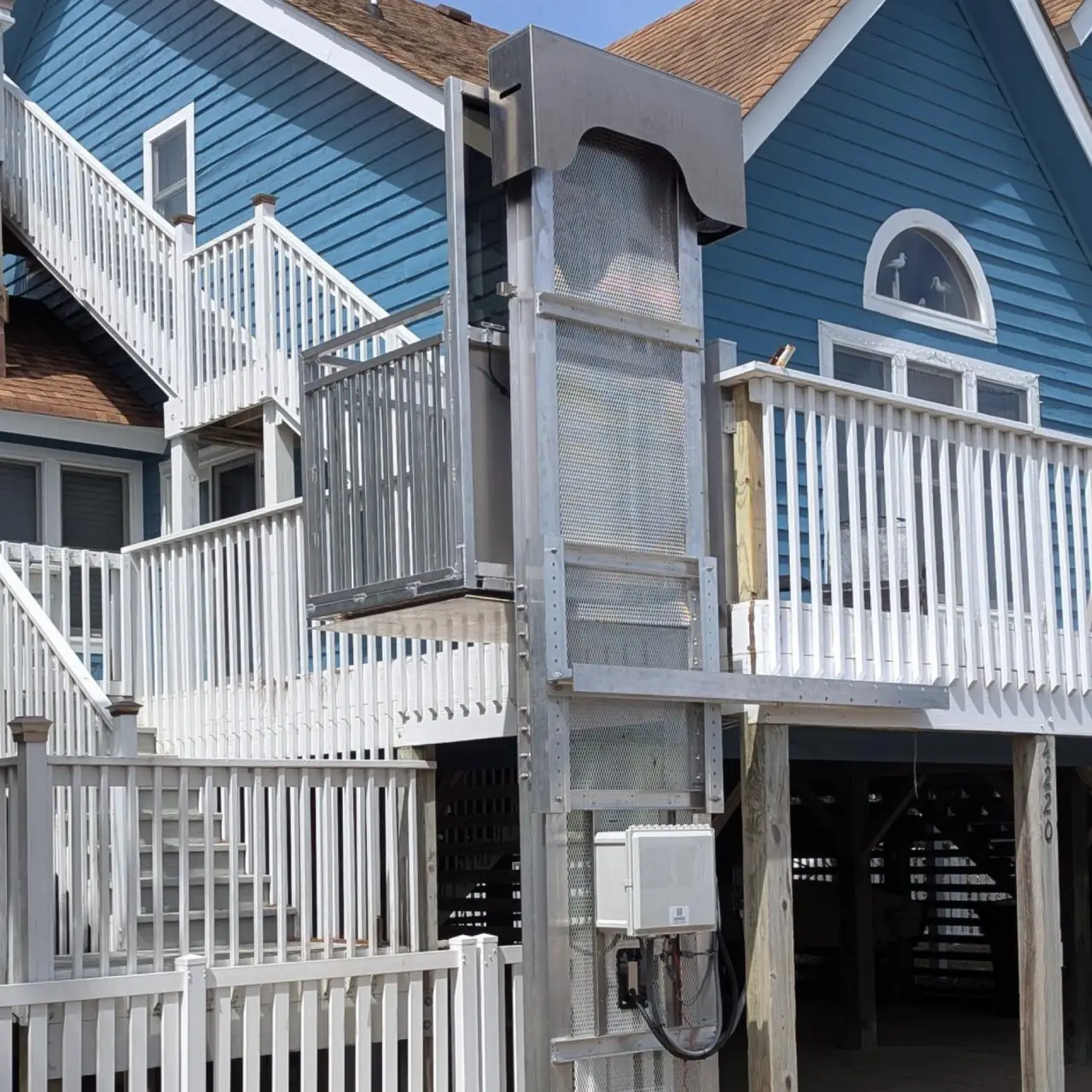
Before a Hurricane or Major Coastal Storm: Bring Your VPL to the Top
If you have an outdoor vertical platform lift, bring the lift platform to the upper landing before the storm arrives.
Do not leave the platform sitting at the bottom of the lift if significant rain or flooding is expected. The lower landing is where water, mud, pine straw, leaves and storm debris are most likely to collect. Raising the platform keeps it farther away from potential standing water and debris.
Do this before conditions become severe. Do not wait until winds are high, lightning is nearby or water is already rising around the lift.
Once the platform is at the upper landing:
● Make sure the upper gate is completely closed and latched.
● Make sure the platform gate is closed and secure.
● Remove anything sitting on the platform.
● Check that nothing is blocking the gate or safety switches.
Back Up Your Gate Latches With Ratchet Straps
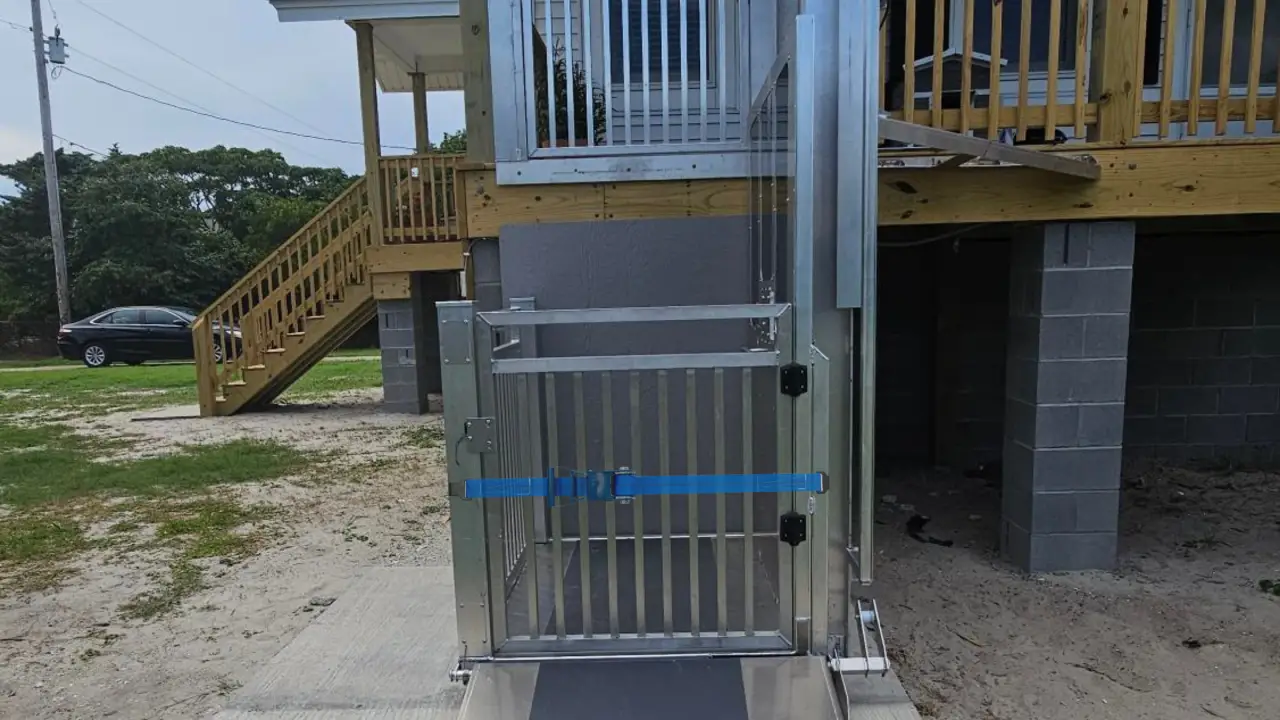
Eastern North Carolina hurricane winds can put a tremendous amount of pressure on lift gates.
Before a major hurricane or tropical storm, we recommend using ratchet straps as a secondary backup to the existing gate latches. The ratchet strap does not replace the factory latch, its purpose is to help keep the gate secured against repeated wind pressure and gusts that can pull or slam against it for hours.
Secure the gate carefully so the strap supports the closed gate without bending the gate, damaging the frame or pulling against wiring or safety switches. Do not attach straps to electrical conduit, wiring, controls, plastic covers or other components that are not designed to carry a load.
The goal is simple: the factory latch holds the gate closed, and the ratchet strap provides additional backup against the wind.
This is especially important for exposed lifts along the Outer Banks, Pamlico Sound, riverfront properties and open areas where there is little protection from wind.
Clear the Bottom of the Lift
Before the rain starts, look underneath and around the bottom landing.
Eastern North Carolina has no shortage of pine straw, leaves and yard debris. That material can collect around a lift and interfere with drainage very quickly.
Remove:
● Pine straw
● Leaves
● Mulch
● Grass clippings
● Sand
● Mud
● Small branches
● Anything stored near or underneath the lift
If your lift has a safety pan underneath the platform, make sure the area around it is clear. The safety pan is designed to detect an obstruction beneath the platform. A branch, pile of pine straw or other storm debris can interfere with the lift or activate a safety circuit.
Do not wedge anything under the lift to hold the safety pan up. Do not bypass a pan switch. If the lift will not operate after a storm, there may be a reason.
Know Whether Your Lift Has a Float Switch
Some of the VPLs we install include a float switch or water-detection safety system at the lower landing. The purpose is to prevent the lift from traveling down into rising water.
This is an important safety feature, but it does not make the lift waterproof. A float switch is the last line of defense — it is not a substitute for proper drainage.
If the lift stops because water has reached the lower landing, do not bypass the float switch just to get the platform down. Let the water recede and determine why it accumulated. If floodwater has reached electrical or mechanical components, call us before operating the lift.
If Your Lift Has Been Flooded, Do Not Test It
We see this after hurricanes more often than we should. The water goes down. The lift looks okay. Someone presses the button just to see if it works.
Do not do that.
If floodwater has reached the lift, call Adaptive Mobility Solutions before you operate it.
Floodwater can affect:
● Electrical connections
● Batteries
● Battery chargers
● Motors and drive components
● Limit switches
● Gate interlocks
● Safety switches
● Wiring
● Control boards
Damage is not always visible. A lift can power on and still have a safety problem.
Call Adaptive Mobility Solutions at 252-623-2102 if you are unsure whether the lift is safe to operate.
What About Losing Power?
Many of the VPLs we install use battery-powered drive systems with an onboard charger. That does not mean the lift has unlimited operation during an outage — the batteries can only provide power for so long without being recharged.
Before hurricane season, know how your particular lift works. Depending on the model, your lift may use household power primarily to operate the battery charger while the lift itself runs from its batteries. Other systems operate differently.
If you are not sure what happens to your specific lift when the power goes out, call us before the storm. We can tell you what you have and what to expect.
This matters particularly if the person in the home cannot use stairs. A VPL should never be the only evacuation plan when a hurricane is approaching.
Do Not Use the Lift During the Storm
Once severe weather begins, leave the lift parked and secured.
Do not operate an outdoor VPL during:
● High winds
● Lightning
● Active flooding
● Storm surge
● Falling tree limbs
● Conditions where gates may be caught by strong wind
The lift can wait. Your safety cannot.
After the Storm: Inspect Before You Operate
Before bringing the platform back down, look at the entire lift.
Start at the bottom. Check for:
● Standing water
● Mud
● Pine straw
● Sand
● Tree limbs
● Flood debris
● Objects underneath the safety pan
● Damage to the lower landing or concrete pad
Then check:
● Gates
● Gate hinges
● Gate latches
● Interlocks
● Call/send controls
● Electrical conduit
● Wiring
● Lift enclosure or tower
● Platform floor
● Platform gate
Remove the storm ratchet straps before returning the lift to normal operation. Make sure every gate opens, closes and latches correctly.
If a gate is bent or will not latch, do not bypass the interlock to make the lift run. Call us.
Saltwater Is Different From Rainwater
For our customers in places like Nags Head, Kill Devil Hills, Kitty Hawk, Hatteras, Ocracoke, Atlantic Beach, Morehead City and other coastal communities, salt exposure deserves special attention.
Saltwater and wind-driven salt spray are much harder on equipment than ordinary rain.
Salt can accelerate corrosion on:
● Fasteners
● Gate hinges
● Electrical connections
● Metal components
● Lift frames
● Hardware
Sand can also collect in tracks, around gates and under safety components.
After a coastal storm, do not assume the equipment is fine just because it was not submerged. Look for salt deposits, sand and corrosion.
Do not attack the lift with a pressure washer. High-pressure water can force moisture into switches, electrical boxes, controls and other components that should stay dry.
If a lift has had significant saltwater exposure, call 252-623-2102 and let us know what happened.
Preparing Your Modular Aluminum Ramp for a Hurricane
Most of the aluminum ramps we install are modular systems, built from connected sections, platforms, legs, supports and transitions rather than being one solid permanent structure.
That is one of the advantages of a modular ramp: it can be adjusted, reconfigured or repaired when needed. It also means the entire system should be visually inspected after major flooding or severe weather.
Before a hurricane or tropical storm clear the ramp completely.
Remove:
● Flowerpots
● Chairs
● Decorations
● Trash cans
● Tools
● Planters
● Anything attached loosely to the rails
You do not want loose objects becoming projectiles or repeatedly striking the ramp during high winds.
Sweep off pine straw and debris. Wet pine straw, leaves, mud and algae can make an aluminum ramp extremely slippery.
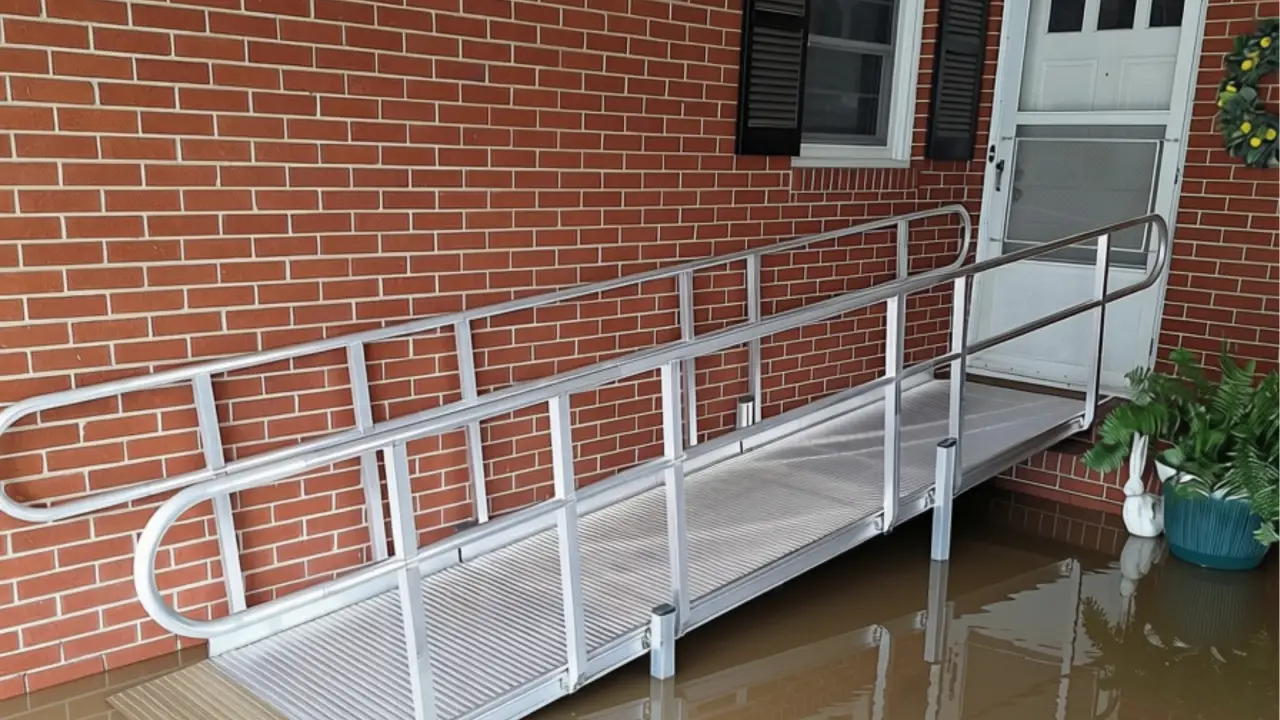
If floodwater is actually covering the ramp surface, do not use it. Even though the ramp itself is aluminum and does not simply float away, moving water can carry debris across the surface and make footing or wheelchair traction unpredictable.
Wait until the water has receded enough to see and inspect the entire walking surface.
Aluminum Does Not Float, but the Ground Under It Can Change
One of the biggest things people miss after flooding is what happened underneath the ramp. The ramp may still look like it is standing in the same place, but floodwater can:
● Wash soil away from under the ramp legs
● Erode around support points
● Soften or undermine the ground
● Move gravel or fill
● Shift concrete pavers or pads
● Create low spots where water collects
● Change the slope or alignment of a ramp section
So while the aluminum ramp itself may not have floated away, the ground supporting it may no longer be the same. That matters.
If the ground under a support has washed out even slightly, a modular section can move, twist or become uneven. That can affect:
● Ramp slope
● Transitions between sections
● Handrail alignment
● Platform level
● Stability of the legs
● The threshold at the top
● The landing at the bottom
Visually Inspect the Entire Ramp After Flooding or High Winds
After the storm, do not just look at the ramp from the doorway. Walk the entire system. Look closely at each section, platform and support.
Check for:
● Sections that look out of line
● Platforms that no longer look level
● Gaps between connected sections
● Handrails that have shifted
● Legs that appear tilted
● Supports sitting in washed-out soil
● New movement when you step on the ramp
● Loose connections
● Bent rails
● Damage from branches or debris
● Changes at the top or bottom transition
If the ramp seems to have moved, even slightly, it should be inspected before regular use. A modular ramp should feel solid and stable — it should not rock, shift, flex unexpectedly or feel different from how it felt before the storm.
If something changed, assume there is a reason.
Floodwater Can Make the Ramp Surface Dangerous
Even a structurally sound aluminum ramp can be unsafe while floodwater is moving across it.
If water is covering any part of the ramp, do not assume the surface underneath is still clear. You may not be able to see:
● Mud
● Sand
● Pine needles
● Branches
● Nails
● Storm debris
● Damage to a transition
● Erosion underneath a support
Moving water can also make wheelchair control much harder, especially on a sloped surface.
Wait until the water recedes. Then clean and inspect the ramp before using it.
Before someone uses a wheelchair, scooter or walker on the ramp, inspect the full route.
Check:
● Ramp sections
● Platforms
● Handrails
● Legs and supports
● Connections between sections
● Entry threshold
● Bottom transition
● Concrete pads
● Ground around the supports
Look for anything that moved. A large limb can bend a rail. Floodwater can wash soil away from a support. Debris can lodge underneath the ramp. Mud can make the bottom approach unusable even when the ramp itself is fine.
Do not judge the ramp from the front door. Walk the whole thing.
If it looks different, feels different or seems to have shifted, call for an inspection.
Our Eastern North Carolina Storm Checklist
Before the storm:
Bring the VPL platform to the upper landing
Close and latch all lift gates
Use ratchet straps to back up the gate latches during major wind events
Clear pine straw, leaves and debris from the bottom landing
Make sure drainage around the lift is open
Remove loose objects around the lift
Clear the ramp and remove anything that could become airborne
Make sure you know how your lift operates during a power outage
Do all of this before conditions become dangerous.
After the storm:
Check for standing water before touching or operating the lift
Look underneath the platform and safety pan for debris
Inspect gates, latches and interlocks
Check for branches, mud, sand and pine straw
Remove storm ratchet straps before normal lift operation
Visually inspect every ramp section, platform, leg and support
Look for erosion or ground movement under the ramp
Do not use a ramp that is still covered by floodwater
If the ramp appears to have shifted, moved or changed, have it inspected
Do not operate a lift that has been flooded
One Phone Number to Keep Before the Storm
If you have an Adaptive Mobility Solutions lift or ramp and you are unsure how to prepare it, contact us before the storm arrives.
If your lift has been flooded, hit by debris, exposed to saltwater or is not operating normally after a storm, call before trying to force it back into service.
If your modular ramp appears to have shifted, settled or moved after flooding, have it inspected before assuming it is safe.
Adaptive Mobility Solutions
252-623-2102
We install and service vertical platform lifts, wheelchair lifts, stairlifts, modular aluminum ramps and accessibility equipment throughout Eastern North Carolina.
From Washington and Greenville to New Bern, Jacksonville, Morehead City and the Outer Banks, we understand what Eastern North Carolina weather can do to outdoor accessibility equipment.
A little preparation before the storm and a careful inspection afterward can prevent a much larger problem.
Schedule a free home accessibility consultation today and find the right wheelchair lift, porch lift, or cargo lift for your home in Eastern North Carolina.

Written by:
Kristen Tschida, Owner and CEO of Adaptive Mobility Solutions
FAQs
Can I use my wheelchair lift during a hurricane?
What should I do if my lift gets flooded?
Does saltwater damage a wheelchair lift?
How do I know if my modular aluminum ramp shifted after a storm?
While aluminum ramps don't float away, storm surge, heavy rain, and standing water can easily erode or wash away the soil and pavers supporting the ramp's legs. After a storm, visually inspect the full length of the ramp before using it. Look for:
-
Sections that appear out of alignment or unleveled.
-
New gaps between connected ramp platforms.
-
Handrails or support legs that look tilted or bent.
-
Any shifting, rocking, or flexing when you step on the surface.
If the ground underneath has moved or the ramp feels unstable, do not roll a wheelchair or scooter across it until it has been inspected and leveled.